

Have you found yourself searching for the Fountain of Youth lately? (Aka putting together an extensive anti-aging skin care routine.) If so, you may have come across retinoids and retinol, and been left wondering what each one actually does. Truth be told, they’re pretty similar — but they do have a subtle difference that is worth noting.
“Retinol and retinoids are both derivatives of vitamin A that increase cell turnover and boost collagen,” says Jen Breslin, an aesthetician at SkinSpirit in Newport Beach, California.
I asked dermatologists and aestheticians to help discern the differences between retinoids and retinol. Read on for their top tips and tricks, plus find some expert- and editor-approved products.
Retinol vs. retinoid | What is a retinoid? | What is retinol? | Who should avoid retinol and retinoids? | How to use retinoids and retinol | Best retinol products to shop | Best retinoid products to shop | FAQs | How we chose | Meet our experts
 Award-winning retinol$undefined$29.49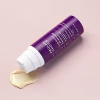
 Editor favorite$undefined$56.00


Retinoid vs. retinol: the main difference
“Retinoid is an umbrella term that covers all ingredients that are derived from vitamin A, including retinol,” says Dr. Geeta Yadav, a board-certified dermatologist and founder of FACET Dermatology in Toronto.
Confused? Don’t worry. Basically, a retinoid is a prescription-strength form of vitamin A, like Retin-A or Accutane. Retinol, meanwhile, is a less harsh derivative of vitamin A — so, when you say vitamin A, you pretty much mean retinol. “Both are great for acne, aging and reducing pigment in the skin. And, actually, they’re both retinoids,” explains Breslin. The biggest difference is that with a retinol-powered product, you are likely to get it over the counter unlike one that is formulated with a retinoid which will likely require a prescription.
Vitamin A, in case you’re curious, is an ingredient that helps improve the appearance of fine lines and wrinkles, brighten skin tone, reduce hyperpigmentation and improve skin elasticity.
What is a retinoid?
Retinoids are derivatives of vitamin A and can include multiple forms, including tretinoin, adapalene, tazarotene and, yes, even retinol. “Retinoids can range in potency, with prescription-strength versions like tretinoin being much stronger than over-the-counter retinol,” says Dr. Brandon Kirsch, MD, FAAD, a board-certified dermatologist at Kirsch Dermatology & MedSpa in Naples, Florida.
What is retinol?
At its heart, retinol is a type of retinoid, which helps treat signs of aging and acne. “It works by promoting cell turnover, exfoliating the skin and increasing collagen production, which helps improve skin texture and tone,” Kirsch says.
You can find retinol in many over-the-counter treatments and skin care products like serums and moisturizers.
Who should avoid retinoids and retinol?
While retinoids and retinol have many skin care benefits, unfortunately, they can be fairly harsh which is why many experts don't recommend the ingredients to those with sensitive skin. “People with highly reactive or eczema-prone skin may experience heightened irritation,” Kirsch says.
Breslin notes that while they're strong, many have a hard time incorporating the ingredient because they might be diving into the deep end first saying “Retinoids are safe for all skin types as long as you’re choosing the correct formulation for your specific skin concerns.”
Those for whom the ingredient is a strict no-no are those who are pregnant or breastfeeding. The experts say to skip retinol and retinoids altogether. “Certain retinoids, especially prescription versions like tretinoin, are contraindicated while pregnant or nursing,” Kirsch advises.
How to use retinol and retinoids
Should you use retinol in your daytime skin care routine or your evening regimen? Usually, it’s the latter. “Adding retinol is typically done in your nighttime routine,” Chacon says. “It’s best to introduce these ingredients gradually and consult with a dermatologist if you have specific concerns or conditions.” And remember, when incorporating retinol or retinoids into your skin care routine, slow and steady wins the race.
When first incorporating a product like this into your skin care routine, you may notice dryness, flaking, peeling or skin sensitivity. You may also see some whiteheads appear. “Trust the process,” Breslin says, adding that this is typically only for the first four to six weeks.
Chacon also recommends starting with a lower concentration and increasing over time, especially if you have sensitive skin. “Be extra mindful and start small with patch tests when using retinol for the first time,” she says. “Only start twice a week, increasing to additional times per week.”
If you're new to the ingredient, it's also best to start it during the colder months when there's less exposure to the sun that can cause sun damage. Because the ingredients are so strong, they can increase sensitivity and thereby do more harm than good if sunscreen isn't strictly implemented.
To use retinol and retinoids, first wash your face with a gentle cleanser. Once your skin is fully dry, apply a pea-sized amount of your preferred retinoid and let it sink in before applying moisturizer. Again, be sure you are always using sunscreen in your morning skin care routine.
Best retinol products to shop, according to experts and editors
Neutrogena Rapid Wrinkle Repair Retinol Pro+ Anti-Wrinkle Night Moisturizer

- Fragrance free
- Gentle
- May be rough on sensitive skin
Product Specs:
Retinol percentage: Not mentioned | Notable ingredients: Hyaluronic acid retinol
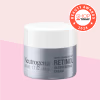
Commerce writer Emma Stessman likes this retinol-packed moisturizer and says she "noticed a big difference in my skin!" The Shop TODAY Beauty Award-winner is a bit more gentle and Stessman adds that it's "more moisturizing than other retinol formulas I’ve tried so it doesn’t dry out my skin as much."
Paula's Choice Clinical 0.3% Retinol + 2% Bakuchiol Treatment

- Mid-strength formula
- Contains retinol alternative
- Some note itchiness
Product Specs:
Retinol percentage: .03% | Notable ingredients: Bakuchiol, peptides, ceramides
“This is a great formula for a retinol beginner,” says Yadav. She recommends it because of the lower percentage of retinol combined with bakuchiol, which is a plant-based retinol alternative. “It’s been proven to deliver comparable results to those of retinol, but without the harsh side effects,” she says. These two ingredients, along with firming peptides, work to target fine lines, uneven skin tone, enlarged pores and rough texture, revealing a youthful, healthy-looking glow.
Alpyn Beauty Clarifying Facial Oil with Retinol & Pink Algae

- Improves skin texture
- Easy-to-read ingredients
- Reduces pore size
- Start with nightly usage only
Product Specs:
Retinol percentage: Not mentioned | Notable ingredients: Pink algae, vitamin C and licorice root
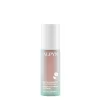
"Alpyn Beauty is a brand I’ve been admiring thanks to their commitment to the environment through their responsible ingredient sourcing and partnership initiatives," shares senior SEO editor Jess Bender. "Beyond how much they care about the process to make their products, they also make skin care that’s extremely effective. Case in point, their recently launched facial oil is made with a blend of retinol, pink algae, salicylic acid and various plant-derived oils and extracts," she continues.
"While I can’t speak on how effective it is against fine lines, I’ve noticed my skin texture smoothing out and a subtle difference in my pore size after about three weeks of nightly usage thus far," says Bender.

SkinMedica Retinol 0.5 Complex

- Has multiple retinol formulas
- Can be used by all skin types
- May cause peeling
Product Specs:
Retinol percentage: .5% | Notable ingredients: Niacinamide, retinol, squalane, peptides, ceramides
This retinol moisturizer is a favorite of Chacon’s, who recommends it, especially for those with sensitive skin. “It’s more mild and should not irritate the skin,” she says. The small bottle truly packs a punch, thanks to a combination of nourishing ingredients like niacinamide, squalane, peptides and ceramides. It also contains the brand’s signature PhytoShield Complex, a combination of antioxidants that help enhance skin's texture and minimize irritation. All work in tandem with retinol to renew skin and diminish the appearance of fine lines. While it is appropriate for all skin types, the brand does note that it may be best to start using it after first conditioning the skin to retinol with their Retinol Complex 0.25.
SkinCeuticals Retinol 0.3

- Very gentle
- Good for sensitive skin
- May not be the strongest
Product Specs:
Retinol percentage: .3% | Notable ingredients: Retinol, bisabolol, boswellia serrata extract
If you have oily skin, Chacon recommends reaching for this handy-dandy little retinol tube. “It helps with the appearance of blemishes and pores without creating more breakouts,” she says. “It actually helps minimize breakouts.” This is thanks not only to retinol, but to a blend of bisabolol (chamomile) and Boswellia serrata extract (frankincense), which help soothe and comfort the skin.
PCA Skin Intensive Brightening Treatment: 0.5% pure retinol

- Helps achieve a radiant glow
- Best for not sensitive skin
Product Specs:
Retinol percentage: .5% | Notable ingredients: Retinol, resveratrol, niacinamide
If you’ve noticed discoloration and dullness, it may be time to try this brightening treatment. “It leaves your skin with the desirable radiant glow,” Chacon says. “This is a great option for those looking to brighten their complexion.” It contains pure retinol to help with just that — but, additionally, it has both resveratrol and niacinamide, which also leave the skin glowing.
Skinbetter Science AlphaRet Overnight Cream

- Rich, nourishing formula
- Joins a retinoid with an AHA
- Can be harsh for some
Product Specs:
Retinol percentage: Not listed | Notable ingredients: AHA (lactic acid), glycolic acid, peptides, ceramides, squalane, niacinamide, hyaluronic acid
If you’re looking for a night cream that really packs a punch, this one from Skinbetter Science is definitely one to try. It’s a favorite of both Breslin and Kirsch thanks to its unique blend of ingredients. “They’re fantastic for sensitive skin, aging and pigment concerns,” Breslin says.
Among those ingredients are wrinkle-reducing peptides, retexturizing glycolic acid and a nourishing blend of ceramides, squalane, niacinamide and hyaluronic acid. They’re combined with the brand’s signature AlphaRet formula, which includes a unique combination of a retinoid and an AHA (alpha hydroxy acid) to reduce the appearance of wrinkles while simultaneously minimizing irritation.
Best retinoid product to shop, according to experts
Differin Acne Treatment Gel

- Available over the counter
- Works on acne
- Some note it didn't help acne
Product Specs:
Retinol percentage: 0.1% | Notable ingredients: Adapalene, sodium hydroxide
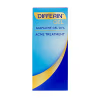
You may be thinking, “Wasn’t Differin a prescription-only product before?” And you’d be right. However, it’s since become an over-the-counter retinoid, which means if you’ve always been curious about it, now’s your chance to finally try it. Kirsch recommends it specifically for acne treatment — and it’s easy to see why, since it contains the retinoid adapalene, which works to prevent breakouts, blackheads, whiteheads, blemishes and clogged pores. The lightweight gel formula can be used daily and helps reduce inflammation while restoring tone and texture.
FAQs
Frequently Asked Questions
Since retinol and retinoids can be harsh on the skin and cause increased irritation and dryness, it’s best to look for ingredients that can help prevent that from happening. It’s all about hydration, hydration, hydration.
Yadav recommends looking for humectants like hyaluronic acid and glycerin, which help draw water into the skin, or emollients like squalane, ceramides, and shea butter, which seal in that hydration. Additionally, Kirsch recommends using an ingredient like niacinamide alongside retinol. “It reduces irritation and strengthens the skin barrier, making it a perfect companion for retinoid treatments,” he says.
To avoid drying out the skin even further, be sure you aren’t using additional harsh products. “Benzoyl peroxide and salicylic acid should be used with caution since they can add to or create dryness and irritation,” Chacon cautions.
Breslin also recommends avoiding vitamin C. “It can be too harsh and drying, especially for sensitive skin,” she notes. Some additional ingredients to stay away from when using retinol include alpha hydroxy acids (AHAs) and beta hydroxy acids (BHAs), since they can strip the skin. However, that doesn’t mean you can’t use them at all. “Just alternate your use of them,” says Yadav. “For example, use retinoids on one night, then glycolic acid the next night.”
Honestly? It’s best not to. “The potential for irritation increases when combining multiple retinol products,” says Chacon. “This can overwhelm the skin and cause increased redness, sensitivity, irritation, dryness, or peeling.”
How we chose
We chose retinol and retinoid products based on advice given by experts regarding the benefits of each, including reducing the appearance of fine lines and wrinkles, improving skin tone and texture and helping with acne. We also considered specific additional hydrating ingredients. Additionally, we spoke with Shop TODAY editors for their first-hand experience with the ingredients.
Meet our experts
- Jen Breslin is an aesthetician at SkinSpirit in Newport Beach, California.
- Dr. Anna Chacon, MD, FAAD, is a board-certified dermatologist, global dermatology innovator, teledermatology pioneer and founder of Miami Derm in Coral Gables, Florida.
- Dr. Brandon Kirsch, MD, FAAD, is a board-certified dermatologist at Kirsch Dermatology & MedSpa in Naples, Florida.
- Dr. Geeta Yadav is a board-certified dermatologist and the founder of FACET Dermatology in Toronto.


